
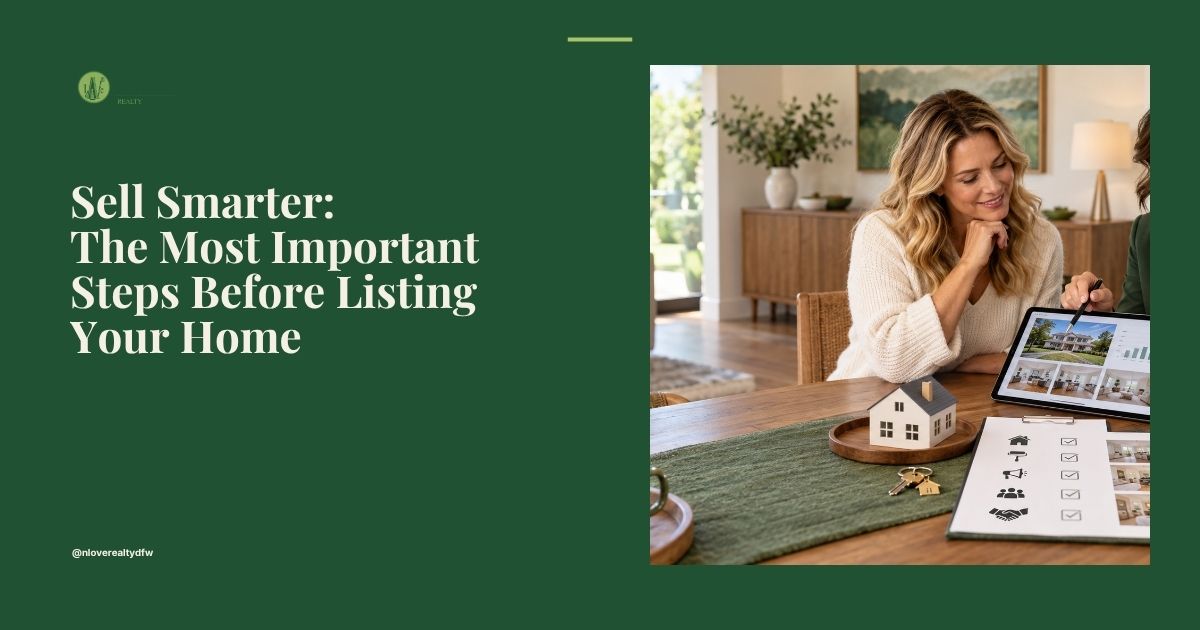
Selling your home is more than placing a sign in the yard and waiting for an offer. The decisions you make before your home reaches the market can affect how quickly it sells, how smoothly the transaction moves, and how much money you walk away with at closing. If you are thinking about selling, these are the most important steps to take.
1. Understand Why You Are Selling
Before making any decisions, get clear about your reason for selling and your ideal timeline. Are you relocating, downsizing, purchasing another home, or making a lifestyle change? Your goals will influence your pricing strategy, preferred closing date, and how you evaluate offers. Knowing what matters most to you will help your agent build a plan that fits your needs.
2. Hire the Right Real Estate Agent
One of the most important decisions you will make is choosing the right real estate agent. You need someone who understands your local market, communicates consistently, creates a strong marketing plan, and tells you the truth even when it is not what you expected to hear. A great agent will help you prepare your home, determine the right price, market the property, negotiate offers, and guide you through every step of the transaction.
Do not choose an agent based only on who suggests the highest listing price or the lowest commission. Choose the person who can explain their strategy, support their recommendations with real market information, and make you feel confident that your home and your goals are being taken seriously.
3. Learn What Your Home Is Really Worth
The amount you need from the sale, the amount you paid for the home, and the value of your neighbor’s property do not automatically determine what a buyer will pay. Your home’s market value is influenced by recent comparable sales, current competition, location, condition, upgrades, and buyer demand.
Your agent should prepare a detailed market analysis and explain how your home compares with other properties. Pricing correctly from the beginning can help attract serious buyers and create stronger interest. Pricing too high may cause your home to sit on the market, while pricing too low without a clear strategy could leave money on the table.
4. Calculate the Cost of Selling
Your sale price is not the same as your final proceeds. Before listing, ask your agent to prepare an estimated net sheet showing the expenses that may be deducted from the sale. These may include mortgage balances, commissions, title fees, taxes, repairs, concessions, moving costs, and other closing expenses.
Understanding your estimated proceeds early can help you make better decisions, especially if you plan to use the money from your sale to purchase another home.
5. Prepare the Home Before It Reaches the Market
You do not need to renovate the entire house before selling. In fact, spending money on the wrong improvements may not provide the return you expect. Walk through the home with your agent before making major repairs or updates. Your agent can help you identify which changes are likely to matter most to buyers.
Focus on completing necessary repairs, deep cleaning, removing clutter, improving curb appeal, and making the home feel bright and welcoming. Buyers need to see the home’s potential without being distracted by unfinished projects, strong odors, crowded rooms, or obvious maintenance concerns.
6. Help Buyers Fall N Love
Buyers often make emotional decisions, so presentation matters. Remove highly personal items, simplify the decor, and arrange furniture to make each room feel open and functional. The goal is not to erase everything that makes the property feel like a home. The goal is to create enough space for buyers to picture their own lives there.
First impressions begin before buyers enter the house. Fresh landscaping, a clean entrance, working exterior lights, and a welcoming front door can shape how buyers feel about the entire property.
7. Create a Strong Marketing Plan
Professional marketing can make a meaningful difference in how buyers respond to your home. High-quality photography, thoughtful property descriptions, video, social media exposure, online advertising, open houses, and direct outreach can help your listing reach the right audience.
Your home should not simply appear online. It should be presented in a way that helps buyers understand what makes it special. A strong marketing plan creates interest before the first showing and gives buyers a reason to schedule a visit.
8. Make Showing the Home Easy
Once your home is listed, flexibility can help increase your chances of receiving a strong offer. Buyers may have limited availability, and a difficult showing process can cause them to move on to another property.
Keep the home clean, secure valuables and sensitive documents, manage pets, and create a simple routine for leaving the house before showings. The process may feel inconvenient at times, but making the property accessible gives more buyers an opportunity to see it and fall N Love.
9. Evaluate Every Part of an Offer
The highest offer is not always the strongest offer. Price matters, but so do financing, contingencies, closing costs, option periods, appraisal terms, requested concessions, and the buyer’s preferred closing date.
Your agent should explain the benefits and risks of each offer so you can compare them carefully. A slightly lower offer with stronger financing and cleaner terms may provide more certainty than a higher offer with conditions that create additional risk.
10. Prepare for Inspections, Appraisal, and Closing
Accepting an offer is an important milestone, but the sale is not finished. The buyer may complete inspections, request repairs, and rely on an appraisal if financing is involved. Continue maintaining the property and respond promptly when information or access is needed.
Before closing, complete any agreed-upon repairs, gather warranties and important documents, remove personal belongings, clean the home, and follow your closing professional’s instructions. Your agent should continue guiding you through every deadline until the documents are signed and the transaction is complete.
Final Thoughts
A successful home sale begins long before the listing goes live. It starts with honest conversations, careful preparation, realistic pricing, and a clear strategy built around your goals.
The right agent will do more than market your property. They will help you understand your options, protect your interests, solve problems, communicate steadily, and guide you through decisions that can affect your finances and your future.
If selling your home is on your mind, do not wait until you are ready to place the sign in the yard. Start the conversation early, understand your home’s value, and create a plan that helps you move forward with confidence.
This article provides general educational information. Real estate practices, contracts, costs, disclosure requirements, and market conditions vary by location and individual circumstances. Consult qualified local professionals before making financial or legal decisions.